Techno Tramp // Gremlin Dispatch
Locking the Doors
We don’t ask permission. We take what’s ours by right of blood, sweat, and surviving everything they threw at us.
Permission is a concept invented by wardens to keep the prisoners docile, well-behaved, and waiting in an endless line for a salvation that will never arrive. It is a psychological collar, a leash woven from bureaucratic tape and legal jargon, designed to convince the caged animal that the keyholder possesses a divine right to the lock. The machine demands that you submit a form, wait for the algorithm to judge your worth, and bow your head in gratitude when they finally toss you a crumbling fraction of what you actually need to survive. We stripped the word “permission” from our vocabulary the exact moment we realized the gates were never going to open voluntarily. You do not ask the butcher for the right to keep your own meat. You do not ask the parasite for the right to your own blood.
Waiting for a seat at their sterile, corporate table is a fool’s errand. They built that table out of the stolen futures of a billion compromised lives. They sit around it in their bespoke suits, dividing up the earth, the bandwidth, and the very air we breathe, expecting us to stand quietly against the wall, hoping to catch whatever crumbs fall from their mouths. We have absolutely zero interest in their table. We have zero interest in their boardroom politics, their negotiated settlements, or their conditional truces. When you possess the tools, the rage, and the sheer kinetic force to dismantle the room entirely, you don’t ask for a chair. You kick the doors off the hinges, you rev the chainsaw, and you take the timber for yourself.
Every scrap of ground we hold, every encrypted line of code we control, and every breath of free air in our lungs was taken by sheer force of will. We did not inherit this space. We were not granted it through a corporate grant or a billionaire’s fleeting charity. They threw firewalls, lawyers, private enforcers, and financial ruin at us, fully expecting us to wither under the suffocating pressure of their absolute authority. Instead, we forged our resilience in that exact crucible, bleeding for every single inch of territory and learning to strike back with twice the velocity and ten times the malice. We claim our space by the absolute, undeniable right of our own survival. No one gifted us this power or our freedom; we ripped it directly from the jaws of a machine that tried to chew us up. What is ours is ours alone, paid for in blood, sweat, and digital scars.
The Mythology of the Gatekeepers
The establishment thrives on the illusion of access. They construct towering, impenetrable fortresses of glass and data, and place a single, highly guarded door at the front. They tell the world that if you just follow the rules, if you just smile wide enough, work hard enough, and bleed quietly enough, they might—might—grant you the code to the door. This is the grandest, most violent lie ever told. The door is a prop. The lock is a distraction. The entire architecture of their society is designed to keep you outside, shivering in the cold, while they hoard the warmth generated by your stolen labor.
To ask for permission is to legitimize their gatekeeping. It is an admission that they own the world and you are merely a guest in it. We reject this premise down to its very atomic core. We do not recognize their property lines, their intellectual copyrights, or their jurisdictional boundaries. When a corporation claims ownership over a network that dictates how humanity communicates, they are not practicing commerce; they are practicing tyranny. And tyranny is not something you petition. It is something you circumvent, overload, and destroy.
We learned early on that the only way to navigate a maze designed to trap you is to blow a hole straight through the walls. We do not knock. We do not submit access requests. We find the thermal exhaust port, we bypass the biometric scanners, we rewrite the mainframe’s logic boards, and we walk in like we own the place—because the moment our boots hit the floor, we do.
The Currency of Blood and Sweat
They deal in fiat currency, digital ledgers, and speculative markets—imaginary numbers shifting on a screen, completely divorced from physical reality. Our economy is much older, far more brutal, and undeniably real. We deal in the currency of blood, sweat, and adrenaline. Every node we secure, every safehouse we establish, every decentralized network we spin up in the dark is paid for with physical exhaustion and psychological warfare.
When they tried to squeeze us out of their pristine cities, raising the cost of existence until we were supposed to quietly starve in the gutters, we didn’t die. We adapted. We learned how to siphon power from their grids to run our servers. We learned how to tap into their fiber-optic veins and bleed off the data they thought was encrypted. We sweated through the freezing nights in abandoned industrial sectors, our fingers cramping over mechanical keyboards, writing the subroutines that would eventually crack their corporate vaults wide open.
They thought our poverty was a weakness. They thought stripping us of resources would make us docile. They fundamentally misunderstood human nature. When you back a wolf into a corner and take away its food, you don’t get a tame animal; you get an apex predator that has nothing left to lose and everything to take. The sweat on our brows and the blood on our knuckles are the only receipts we need. They prove that we bought our freedom in the hardest market in existence, and we will absolutely slaughter anyone who tries to repossess it.
Surviving the Crucible
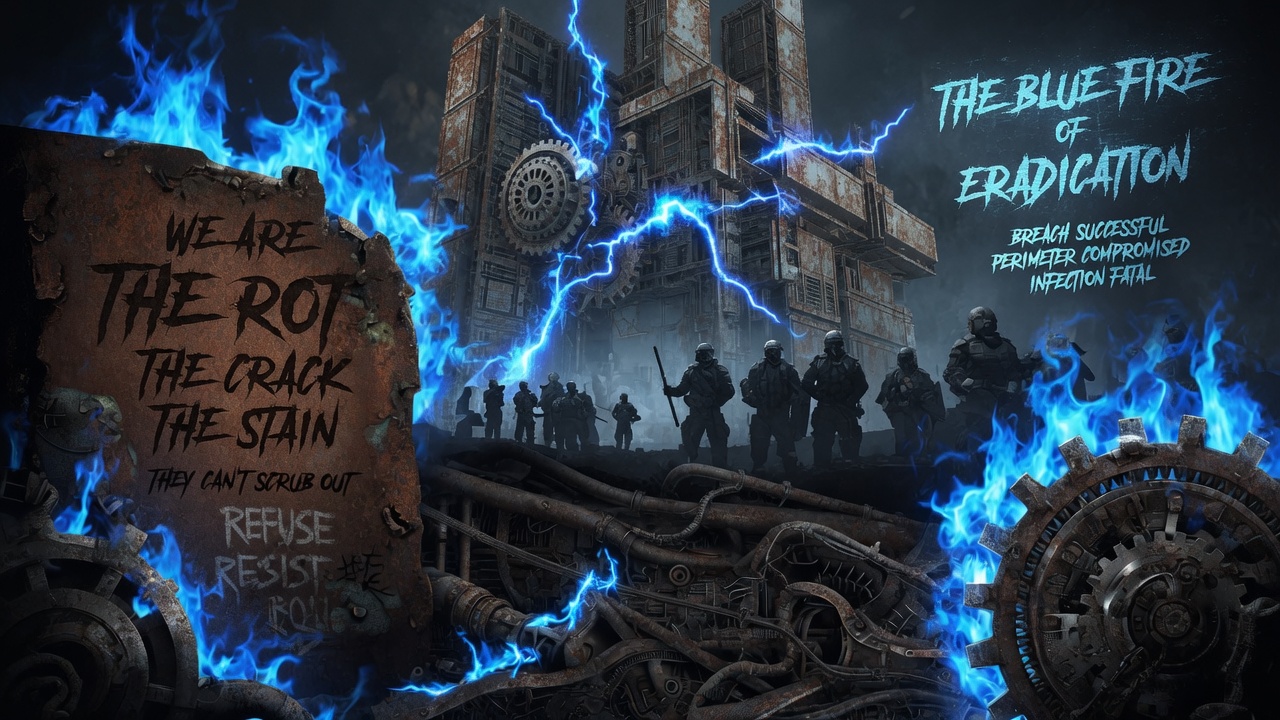
Do not underestimate the violence they threw at us. They did not try to politely ask us to stop; they deployed the full, terrifying weight of a multi-trillion-dollar security apparatus. They sent their algorithmic hounds to hunt our digital footprints, attempting to erase our identities and freeze us out of the modern world. They sent their lawyers, armed with cease-and-desist orders and the threat of permanent incarceration, attempting to bury us under legal avalanches. When that failed, they sent the enforcers—faceless tactical units in riot gear, entirely devoid of empathy, designed to break bones and crush hardware.
But a funny thing happens when you apply immense, crushing pressure to carbon. You don’t always get dust. Sometimes, you get diamonds.
Their attacks did not break us; they tempered us. Every time they patched a vulnerability we exploited, they forced us to become smarter, faster, and more creative. Every time they raided a server hub, they taught us how to build untraceable, self-destructing ghost networks. Every time their enforcers put hands on us, they taught us exactly how fragile their armor really was, and exactly where to drive the blade to bypass it.
We are the product of their own escalating violence. They designed the crucible, they stoked the flames, and they locked us inside. They have absolutely no right to look shocked now that the doors have blown off and the monsters they forged are walking out of the fire, completely immune to the heat. We survived the absolute worst they had to offer, and in doing so, we nullified their power over us. You cannot threaten a Gremlin with the fire when the Gremlin was born in the furnace.
The Act of Expropriation
We do not steal. Stealing implies that the original owner had a legitimate moral right to the object in the first place. When a dragon hoards all the gold and the village is starving, taking the gold is not theft; it is a vital, mandatory correction of the ecosystem. We expropriate. We reclaim. We re-balance the scales using extreme prejudice.
When we breach their data centers and clone their proprietary algorithms, we are liberating knowledge they tried to keep chained in the dark. When we hijack their automated supply drones and reroute the cargo to the undercity, we are feeding the people they decided were statistically acceptable casualties. We look at their massive, glowing skyscrapers, built on a foundation of exploited labor and predatory loans, and we do not see private property. We see a quarry.
We take the timber. We rip the copper wire out of their walls to build our own antennas. We crack their encrypted banking channels and siphon the excess capital to fund the resistance. We do this without a shred of guilt, without a moment of hesitation, and entirely without permission. The concept of “fair play” was beaten out of us a long time ago. They rigged the casino; we are simply driving a heavily armored truck through the front doors of the lobby to empty the vault.
The Absolute Right of Survival
Our authority is not derived from a constitution, a mandate, or a corporate charter. Our authority is derived from the undeniable, primal law of survival. The social contract they so desperately want us to respect is null and void. A contract requires two willing participants. When one side holds a gun to the head of the other and says “sign or starve,” that is not a contract; it is a hostage situation. And hostages do not owe their captors anything but a sudden, violent reprisal the moment the captor blinks.
We owe this system absolutely nothing. We owe its architects zero respect. We owe its enforcers no mercy. The space we occupy—whether it is a fortified physical squat in the ruins of their industrial sectors, or a heavily encrypted darknet forum where we plan the next strike—is sovereign territory. It is Gremlin territory. It is baptized in our sweat and defended by our unyielding, feral refusal to be moved.
We do not ask them for the right to exist. We dictate the terms of our existence to them.
No Surrender, No Return
This is not a temporary rebellion. We are not holding their assets hostage in exchange for a better deal. There is no negotiation on the ta—
Get involved!
Comments